Table of Contents
ToggleThe Xbox 360 Elite was Microsoft’s answer to gamers who wanted more than just a console, they wanted a statement piece. Released in 2007, this black beauty represented a premium tier of the Xbox 360 lineup, bundling raw power with aesthetic appeal that still turns heads two decades later. Even in 2026, when consoles have evolved into streaming powerhouses and cloud gaming dominates the market, the Xbox 360 Elite remains a target for collectors, nostalgia-driven gamers, and anyone hunting for the definitive way to experience the Xbox 360’s legendary library. Whether you’re curious about what made it tick, hunting for one to complete your collection, or wondering if it’s worth the investment, this guide covers everything you need to know about this iconic piece of gaming hardware.
Key Takeaways
- The Xbox 360 Elite, released in 2007, was Microsoft’s premium console offering that doubled the storage capacity to 120GB and featured a sleek matte black design that remains highly valued by collectors today.
- The Elite’s 120GB hard drive was transformative for the gaming experience, enabling players to install multiple full games, maintain extensive digital libraries, and prepare for services like Game Pass without constant storage management.
- While the Xbox 360 Elite shared identical internal processing power with standard models, its superior storage and bundled HDMI cable provided practical advantages for digital distribution and high-definition gaming during the console’s prime years.
- By 2026, Xbox 360 Elite consoles command $200-400 USD on the secondhand market for working units, with complete-in-box examples reaching $500+, making it a strong investment for retro gaming collectors despite being nearly two decades old.
- The Elite suffered from the same thermal reliability issues as other early 360 models, though later Jasper revisions (2009) significantly improved stability; proper maintenance including temperature management and hard drive backup is essential for long-term preservation.
- Modern gamers can access classic Xbox 360 titles through Game Pass subscriptions, backwards compatibility on Xbox Series X|S, or PC emulation, offering practical alternatives to hunting for original hardware while the authentic physical console remains the gold standard for preservation enthusiasts.
What Was The Xbox 360 Elite?
Release Date And Market Position
Microsoft launched the Xbox 360 Elite on October 23, 2007, roughly two years into the Xbox 360’s lifecycle. By that point, the standard console had already cemented itself as a serious contender in the seventh generation console wars, but the Elite arrived as a tier-one option for players who could afford a premium experience. The Elite wasn’t just a hardware revision, it represented a deliberate strategy to segment the market. While the standard Xbox 360 came with a 20GB hard drive, the Elite doubled that capacity and added exclusive features that justified its higher price point.
The console positioned itself as the aspirational choice for hardcore gamers and early adopters. It arrived during a golden age of 360 gaming: Halo 3 was dominating multiplayer, the Game Pass predecessor (Xbox Games with Gold) was gaining traction, and third-party studios were pumping out AAA titles at an unprecedented rate. The Elite’s premium build quality and expanded storage made it the de facto choice for competitive gamers, content creators, and anyone planning to accumulate a large digital library.
Key Specifications And Hardware
Under the hood, the Xbox 360 Elite ran on virtually identical internal specifications to the standard model. The Xenon processor (a tri-core PowerPC CPU) clocked at 3.2GHz, paired with an ATI Xenos GPU capable of 10 million polygons per second. These specs sound quaint by 2026 standards, but in 2007, they pushed boundaries. The 512MB of unified RAM allowed developers to create visually ambitious games that wouldn’t hit current-gen systems for another console generation.
The critical difference was storage. The Elite shipped with a 120GB hard drive, a massive upgrade from the 20GB standard edition and the 60GB variant that preceded it. This meant you could install full games, download substantial DLC packs, and maintain a sizeable Games with Gold library without constant deletion and reinstallation. For players interested in digital distribution, this was transformative. You could store dozens of full games simultaneously, a luxury that casual players on the standard 20GB model simply couldn’t afford.
Graphically, the Xenos GPU supported DirectX 9 and could output up to 1080p (though most games defaulted to 720p for performance reasons). The Elite connected via both wired Ethernet and Wi-Fi, eliminating the need for the wireless adapter that bundled with standard consoles. DVD playback was standard: HD-DVD was an optional add-on, though it lost the format war to Blu-ray and became obsolete within a few years.
Design And Aesthetic Differences
Black Exterior And Premium Build Quality
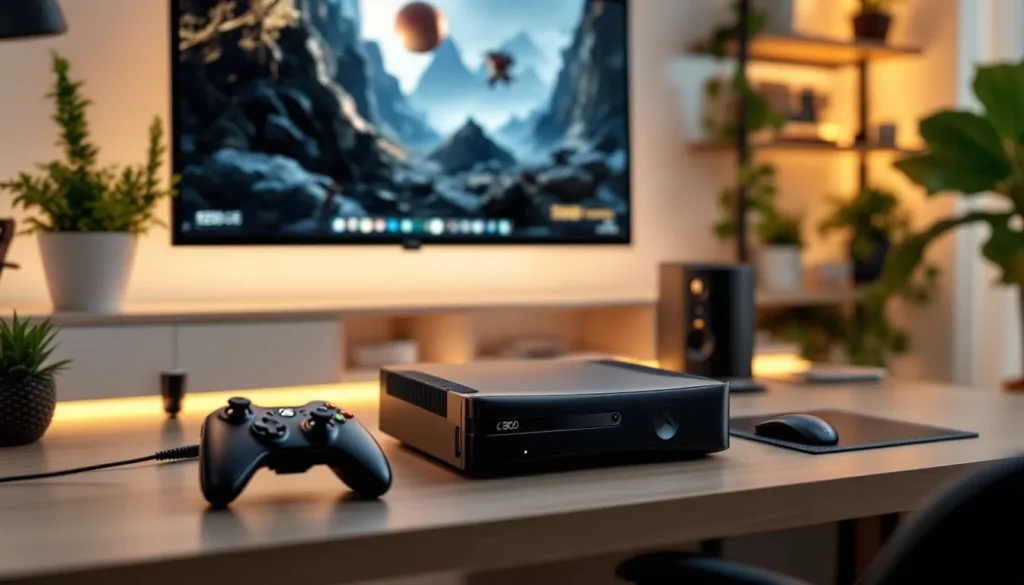
The Xbox 360 Elite’s most immediately striking feature was its matte black finish. While the standard console shipped in white or grey, the Elite adopted a sleek, professional appearance that aged remarkably well. The black chassis felt intentional, it communicated exclusivity without being flashy. The casing was reinforced, and the overall build quality felt noticeably sturdier than the plastic-heavy standard edition. Early adopters appreciated that the Elite looked like premium hardware, not just another off-the-shelf box.
The matte texture also served a practical purpose: it resisted fingerprints far better than glossy finishes and gave the console a less sterile appearance. The black exterior made the Elite immediately recognizable in LAN party setups or gaming lounges. Gamers who invested in the Elite got the psychological benefit of owning something that felt special. That aesthetic consistency carried through to the bundled controller and accessories, creating a cohesive visual package.
Build quality, but, proved to be a double-edged sword. While the external construction was solid, the Xbox 360 Elite, like all 360 models, suffered from the same fundamental hardware vulnerabilities as its predecessors. The 65nm chip architecture ran hot, and the soldering on the GPU proved fragile over time. We’ll dive deeper into reliability issues later, but it’s important to note that a prettier package couldn’t overcome Microsoft’s ongoing thermal management struggles.
Controller And Accessories
The Xbox 360 Elite shipped with the Xbox 360 Wireless Controller, a refined version of the original launch pad controller. This controller featured improved wireless range, better ergonomics, and a more durable D-pad compared to earlier iterations. The wireless functionality was crucial for convenience, no trailing cables meant cleaner setups and better mobility during gameplay. For players used to tethered wired controllers, the wireless experience felt liberating, though battery consumption was a trade-off most accepted gladly.
The Elite bundle also included an exclusive HDMI cable, a small but important detail that highlighted Microsoft’s push toward high-definition gaming. While the standard console required a component cable to achieve 1080p output, the Elite’s bundled HDMI cable delivered digital video out of the box, reducing the accessory purchases required for a complete HD setup.
Accessory compatibility was solid. The Elite used the same controller connections and charging dock as other 360 models, so your existing wireless controllers, steering wheels, arcade sticks, and flight sticks all worked seamlessly. But, the Xbox 360 Controller for backwards compatibility with Xbox One proved limited: while older controllers worked on Xbox One, newer optimizations and features didn’t fully transfer. Today, collectors often keep Elite consoles with their original controllers intact, viewing them as matched sets that preserve the experience exactly as it was in 2007.
Performance And Storage Capabilities
Processing Power And Graphics
The Xbox 360 Elite delivered identical processing power to the standard console. The triple-core Xenon CPU and Xenos GPU were non-negotiable across all 360 variants. What changed wasn’t the raw horsepower but what developers could do with it thanks to the Elite’s storage advantages. Games didn’t load faster from disc or stream differently, but the 120GB hard drive allowed for larger texture caches, more frequent frame buffer operations, and better streaming of open-world environments.
In practical terms, the Elite didn’t make games look significantly sharper or run faster than on a standard 360. A copy of Gears of War 3 on the Elite rendered identically to the standard edition. The GPU’s 10-megapixel-per-second fill rate and support for up to 512MB of VRAM (shared between CPU and GPU) remained constant. What the Elite’s advantage really provided was developer flexibility and player-side convenience, not raw performance gains.
Where the Elite shone was in handling demand from the increasingly robust Game Pass library and player-generated content. Games like Skyrim and Fallout 3, with their massive mod support and extensive DLC ecosystems, benefited enormously from the extra storage space. Players could maintain multiple game saves, install DLC packages, and keep backups, luxuries that felt cramped on a 20GB machine.
Hard Drive Storage Advantages
The 120GB hard drive was genuinely transformative for the Xbox 360 ecosystem. Here’s why it mattered:
Game Installation: By 2010-2015, major releases shipped with mandatory hard drive installs. A 20GB console couldn’t even hold two modern AAA titles plus saves and DLC. The Elite’s 120GB easily accommodated multiple full games, making the ownership experience stress-free. You bought the game, installed it, and forgot about storage for months.
Digital Distribution: The later years of the 360 lifecycle saw explosive growth in digital game sales via the Xbox Marketplace. Players with Elite consoles could maintain working libraries of 40-60 titles simultaneously. Standard console owners had to pick and choose, constantly rotating what they kept installed.
Game Pass Integration: While Game Pass as we know it today didn’t launch until 2017 (technically after the Elite’s commercial peak), the Elite’s storage capacity future-proofed it for the service’s eventual arrival. Players who revisited their Elite consoles in the 2020s could tap into a backlog of classic titles without storage bottlenecks.
Content Caching: The hard drive also stored game updates, profile caches, and system software. The Elite’s 120GB meant you rarely hit the storage ceiling, and performance remained snappy even with 50+ games installed.
It’s worth noting that by 2026, the hard drive itself is the Elite’s most likely failure point. Mechanical drives in two-decade-old hardware are ticking time bombs. Any modern Elite collector should treat the hard drive as consumable and consider replacement or external backup strategies.
Game Library And Exclusive Titles
Must-Play Games For The Elite
The Xbox 360 boasts one of the most stacked gaming libraries of all time. The Elite unlocked access to the full ecosystem without storage constraints. Here are the essential titles that defined the generation:
Halo Trilogy (Halo 3, Halo 3: ODST, Halo Reach): The Halo franchise was the 360’s killer app. Halo 3‘s multiplayer defined competitive console gaming for a generation. Reach‘s campaign was the franchise’s narrative peak. If you own an Elite and haven’t revisited these, you’re missing the cultural moment that made the Xbox 360 matter.
Gears of War Series (Gears 1-3, Judgment): Brutally competent third-person shooters that set the industry standard for cover-based combat. Gears 3 stands as the series’ mechanical zenith. The campaign narratives are disposable, but the gameplay loop is perfect.
Bioshock Series (Bioshock 1-2, Infinite): Immersive sims that treated players like intelligent adults. Infinite‘s narrative complexity and visual ambition still hold up. The plasmid system rewards creative problem-solving in ways modern games have largely abandoned.
Elder Scrolls IV: Oblivion & Fallout 3/New Vegas: Open-world behemoths that justify the Elite’s 120GB storage. These games soak 200+ hours without losing grip. The modding community on PC is legendary, but the console versions are perfectly playable even in 2026.
Mass Effect Trilogy: Sci-fi RPGs that treat player choice with unprecedented seriousness. The trilogy spans 100+ hours and is one of the best narrative experiences in gaming, even if Mass Effect 3‘s ending remains controversial.
Forza Motorsport Series (Forza 2-4): Genre-defining racing sims. Forza 3 and Forza 4 balanced accessibility with depth, making them essential for racing enthusiasts.
Red Dead Redemption: The template for open-world design. RDR1 is tighter than its sequel and remains endlessly playable in 2026. The story of John Marston is gaming’s greatest Western.
Backwards Compatibility
The Xbox 360 Elite shipped with weak backwards compatibility with Xbox 1 titles. Unlike the later-generation Xbox One, which offered robust backwards compatibility with entire franchises, the 360’s backwards compatibility list was limited and inconsistent. Of the 600+ original Xbox games released, only about 50-60 saw official 360 compatibility. Some third-party publishers didn’t license their back catalog for the feature, and rarer titles like Panzer Dragoon Orta command premium prices specifically because they’re authentic Xbox 1 experiences.
The Elite’s 120GB drive didn’t solve this limitation. Backwards-compatible games required hard drive installation and licensing keys, and Microsoft’s licensing agreements expired for many titles. Today, if you’re hunting for a complete original Xbox experience, you’re better served by an original Xbox console or emulation rather than relying on the 360’s hit-and-miss compatibility layer.
But, the Elite’s library of native 360 titles is so extensive that backwards compatibility almost feels like a footnote. With 800+ exclusive games available, the backwards compatibility gap matters far less than you’d think.
Online Gaming And Xbox Live
Multiplayer Features And Community
The Xbox 360 Elite shipped with a gold-tier Xbox Live subscription built into its value proposition. This wasn’t mandatory (silver memberships were free), but the bundled gold subscription emphasized that the Elite was pitched at serious online gamers. In 2007-2010, Xbox Live was the place for console multiplayer. The service’s matchmaking infrastructure, friends system, and achievements ecosystem were technically superior to PlayStation Network at the time.
Multiplayer on the Elite was genuinely thrilling during the console’s prime years. Halo 3‘s Arena ranks, Gears of War 2‘s gnashers duels, and Modern Warfare 2‘s FPS insanity created a competitive scene that rival platforms struggled to match. The Xbox 360 Live Gold service included free monthly games (Games with Gold), online multiplayer access, and exclusive discounts on the Xbox Marketplace.
Communication tools were robust for the era. Voice chat through wireless controllers was standard: dedicated headsets offered quality upgrades. Party systems allowed cross-game chat, a feature that wasn’t trivial in 2007 and cemented Xbox Live’s superiority during the early 360 years. The friend’s list integrated beautifully with achievements and leaderboards, creating a social graph that made online gaming feel connected rather than anonymous.
By 2026, the online multiplayer scene is barren. Most games have been delisted or shut down. Halo 3‘s servers are offline. Modern Warfare 2‘s matchmaking has been dead for years. But, the community has rallied around preservation efforts. Private servers and community-run alternatives exist for popular titles, and niche communities still fire up some games during specific events. The Elite’s legacy in online gaming is historical rather than active.
Networking And Connectivity Options
The Xbox 360 Elite included both wired Ethernet and Wi-Fi connectivity, a built-in feature that the standard console required an adapter for. This was crucial during the console’s lifespan. Wired connections delivered consistent, low-latency performance, essential for competitive multiplayer. Wi-Fi provided flexibility for living rooms away from network switches.
The Elite’s Wi-Fi used the 802.11b/g standard, which by modern standards is ancient. 2.4GHz only, no 802.11n, and speeds capped at 54Mbps. In 2026, this is essentially decorative. Modern internet speeds would overwhelm these specs. But, during the 360’s prime years (2007-2015), these connectivity options were genuinely forward-thinking.
Network performance was affected by the 360’s architecture. The ethernet adapter connected via USB, creating occasional latency issues. Hardcore competitive players used wired connections exclusively, and for good reason, even small millisecond differences affected TTK (time-to-kill) in fast-paced shooters. The Elite’s bundled HDMI cable and ethernet port created a complete HD/online package out of the box, eliminating the accessory shopping some standard buyers needed.
Reliability, Maintenance, And Common Issues
Red Ring Of Death And Hardware Failures
The Xbox 360’s most infamous legacy is the Red Ring of Death (RROD), three flashing red lights indicating a critical hardware failure. The Elite wasn’t immune. In fact, early Elite units (2007-2009 production runs) suffered from similar thermal management failures as their standard counterparts. The culprit: a 65nm process GPU that ran hot and suffered from solder joint fatigue. Under thermal stress, the GPU would delaminate from its substrate, causing complete system failure.
Microsoft addressed this gradually. The later Jasper revision (2008-2009) introduced a die-shrink to 65nm for the CPU as well, reducing overall heat output. Even later revisions pushed to 45nm, significantly improving reliability. An Elite purchased in 2009-2010 was substantially more likely to still function in 2026 than a launch unit from 2007. But, even Jasper and later models can fail after 15+ years of thermal cycling.
The RROD was Microsoft’s way of signaling a fatal fault, but what killed these machines? Primarily:
- Thermal fatigue of solder joints on the GPU/CPU package
- Inadequate thermal paste degradation after years of operation
- Fan bearing wear, reducing cooling efficiency
- Heatsink separation in some unlucky units
While Microsoft extended the warranty for RROD failures and eventually released refurbished 360s, the damage to brand trust was permanent. PlayStation 3 reliability during the same period was notably superior, and this hardware-quality gap played a role in the 360’s eventual market dominance being less pronounced than it could have been.
Maintenance Tips For Longevity
If you own or plan to acquire an Elite in 2026, here’s how to maximize its lifespan:
Temperature Management: Keep your Elite in a well-ventilated environment. Dusty, enclosed spaces accelerate thermal failure. The console should sit on a hard surface, not carpet or fabric. Ensure at least 6 inches of clearance on all sides for air circulation. If you’re serious about preservation, a small desk fan directing air across the console’s vents isn’t overkill.
Disc Maintenance: Clean discs gently with microfiber cloths in radial motions (toward the center hole, not circular). Scratched discs cause read errors and make the laser work harder. Store games in cases away from direct sunlight. The laser diode is a consumable component that weakens over time: gentle disc handling extends its life.
Power Management: Use a quality surge protector. Power fluctuations can degrade components, particularly the power supply. The 360’s power adapter is proprietary and failure is expensive. Don’t leave the console running 24/7 unless necessary. Thermal fatigue accelerates with continuous operation.
Hard Drive Backup: The 120GB mechanical hard drive is your Elite’s most likely failure point in 2026. Back up your saves and digital games to an external drive or USB. If you can transfer your library to an Xbox One or use cloud saves (where available), do so. The drive itself can be replaced, but original 120GB units are increasingly rare.
Cleaning: Every 1-2 years, gently vacuum the external vents and use compressed air to clear internal dust. Don’t open the console unless you’re comfortable with electronics: you’ll void any remaining warranty and risk static discharge damage.
Avoid Modifications: RGH and JTAG modifications (which we’ll touch on later) promise extended functionality but introduce heat and instability. Unless you’re specifically seeking these mods, stock Elite hardware is more reliable.
Collectors’ Value And Modern Market Status
Resale Prices And Availability Today
In 2026, Xbox 360 Elite consoles command respect on the secondhand market. Prices typically range from $200-400 USD for working units, depending on condition, storage capacity, and included accessories. A pristine, complete-in-box Elite with original controller and cables can reach $500+. Compare this to the console’s original $479.99 MSRP (2007), and you’re looking at remarkable price retention for 19-year-old hardware.
Availability is your real challenge. The Elite isn’t commonly stocked by retailers anymore. GameStop and major chains stopped carrying used 360 consoles years ago. Your market is online: eBay, Facebook Marketplace, specialty retro gaming shops, and dedicated 360 collector communities. Prices fluctuate based on condition and market sentiment. A spike in retro gaming nostalgia (often tied to recent console reviews and retro gaming coverage) can push prices up 10-20% in the short term.
Condition heavily affects value. A console with original box, all accessories, and no visible wear fetches premium prices. A unit with a worn controller, missing HDMI cable, and surface scratches sits in the $200-250 range. The hard drive’s status matters too, a failing or dead drive significantly impacts value unless the buyer is specifically seeking a console for modification or repair purposes.
Shipping is another consideration. The Elite is heavy and fragile. Shipping costs can add $25-50 to a purchase, and the risk of transit damage means many sellers require signature delivery. Plan for total out-of-pocket costs to exceed the base console price by 15-20%.
Why Collectors Still Seek The Elite
Why chase a $300+ console when the standard 360 (or even a Jasper revision) costs significantly less? Several reasons:
Aesthetic Prestige: The black matte finish looks objectively better on shelves next to other gaming hardware. Collectors value the cohesive visual presentation. A row of consoles with the Elite positioned prominently reads as a curated collection, not random hardware.
Storage Certainty: The 120GB drive eliminates storage anxiety. You can install your entire Game Pass library without calculation. For completionists and collectors, this matters psychologically. A standard console with a 20GB drive feels cramped: the Elite feels capable.
Bundled Authenticity: Collectors prize original packaging and bundled items. An Elite with the original HDMI cable, wireless controller, and documentation feels like a time capsule. These items are hard to source separately, making a complete boxed Elite worth more than the sum of its parts.
Historical Positioning: The Elite represented Microsoft’s premium tier. Collectors building a comprehensive 360 library want at least one premium unit. It’s the same psychology that drives people to collect both a standard PlayStation and a special edition variant, the Elite stakes a meaningful place in Xbox history.
Modding Appeal: Enthusiasts seeking RGH or JTAG modifications often prioritize Elite units. The black chassis and premium feel make a modified Elite feel more “finished” than a white standard edition. Some modders see the Elite as the ideal blank canvas.
The collector’s market for the Elite is small but passionate. These aren’t casual purchases: they’re acquisitions by people actively building game libraries or preserving hardware for historical reasons. The Xbox 360 Console for sale is available, but sourcing a premium Elite specifically requires patience and targeted searching.
Comparison With Other Xbox 360 Models
Elite Vs. Standard And S Models
Microsoft released multiple Xbox 360 variants across the console’s lifecycle. Understanding the distinctions clarifies why the Elite matters:
Original White (2005-2006): Launched with a 20GB hard drive or a HD-DVD-equipped model. These units are notoriously unreliable. The 65nm GPU ran hot, and solder joint failure was rampant. If you encounter an original white 360, treat it as fragile. It’s a piece of history but functionally precarious in 2026.
Standard Grey (2006-2007): Marginally more reliable than the white, still with thermal issues. Came with either 20GB or 60GB drive options. No HDMI bundled. This is the “okay but not great” 360, playable, but not the purchase to chase.
Elite (2007-2009): The premium black variant with 120GB and HDMI cable. Matte black exterior communicated quality. Early Elite units (2007-2008) still suffered from thermal issues, but later Jasper revisions (2009) significantly improved reliability. If you’re buying vintage 360 hardware, the Elite is the safest bet for longevity.
S Model (2010-2013): The 360 S arrived after the RROD crisis peaked. The new design was smaller, featured a marginally better power supply, and came with a 250GB hard drive. Cosmetically, the S looked sleeker with a curved design replacing the flat-top aesthetic. The S is arguably more reliable than the Elite, partly because Microsoft had finally solved the worst thermal issues. But, the glossy white finish on the S showed dust and fingerprints egregiously. The 360 S is the better functional choice for modern play, but the Elite has better industrial design.
E Model (2013 onward): The final revision, essentially a cost-reduced S model. By this point, the 360 was in its twilight, with the Xbox One approaching. The E model is fine but undistinguished. Most were either heavily played or sat in warehouses. If you’re hunting affordable working hardware, the E is acceptable: if you want preserved vintage gear, skip it.
Value Proposition For Different Gamers
For Collectors: The Elite is the clear choice. Its black finish, premium build, and 120GB drive make it the aspirational 360 variant. Complete-in-box examples are prized.
For Casual Replayers: A standard 20GB or 60GB model is sufficient. If you’re revisiting 2-3 favorite games for a weekend, storage limits don’t bite. Save $100+ over an Elite.
For Completionists: The 360 S is technically superior. More reliable, better power management, and 250GB of storage beats the Elite’s 120GB. If you’re building a massive Game Pass library to replay across dozens of titles, the S’s larger drive is meaningful. But, the Elite’s aesthetic superiority matters too, it’s personal preference.
For RGH/JTAG Modders: The Elite’s premium feel justifies the modification cost. Some modders specifically source Elite units because the final product feels more polished. The RGH Xbox 360 market is niche, but enthusiasts pursue Elite chassis.
For Purists: The Elite is the definitive stock experience. If you want to play the 360 exactly as Microsoft intended during its premium tier, the Elite with original controller, HDMI, and 120GB drive delivers that.
Emulation And Modern Gaming Alternatives
Emulation On PC And Modern Platforms
In 2026, the Xbox 360 has functional emulation on PC through projects like Xenia and RPCS3 (which handles PlayStation 3 games but shares architecture overlap). Xenia, the leading 360 emulator, can run dozens of games at playable frame rates on high-end hardware. Titles like Halo 3, Gears of War, and Mass Effect are playable at 4K resolution and 60FPS or higher, vastly superior to the original hardware’s capabilities.
But, emulation comes with caveats:
Licensing Issues: Emulating is legal: distributing game ROMs isn’t. You must own physical copies of games to legally dump and emulate them. This creates friction, you need both the physical game and powerful PC hardware.
Compatibility Variance: Not every game runs. Some titles have game-breaking bugs or require specific emulator configurations. Checking compatibility databases before purchasing games for emulation is essential.
Controller Mapping: The original Xbox 360 controller layout translates well to modern gamepads, but some games have quirky button configurations that feel awkward. Xbox 360 Controller on PC is still the standard input method, maintaining authenticity.
Loss of Experience: Emulation plays the game, but it strips away the physical hardware ownership, the tactile experience, and the connection to the console’s era. For enthusiasts, that matters.
Emulation is best viewed as a backup option for games that are no longer playable on original hardware due to server shutdowns or disc rot. For serious 360 gaming, original hardware is still the authentic path.
Transitioning Classic Xbox 360 Games To Today
Many classic 360 games are available on modern platforms through official channels:
Xbox Game Pass: The spiritual successor to Games with Gold, Game Pass includes hundreds of 360-era classics (backwards compatible titles). Subscribers can play Halo: The Master Chief Collection, Gears of War, Fallout 3, and many others without hunting down physical copies. This is the most convenient path for modern players, subscription access without hardware requirements.
Remasters And Reimaginations: Popular franchises received modern remakes. Halo: The Master Chief Collection bundles Halo 3, Reach, 4, and others with modern graphics and matchmaking. Gears of War: Ultimate Edition remastered the original. These aren’t perfect replacements for the originals, but they capture the essence.
Backwards Compatibility: The Xbox One and Series X
|
S have official backwards compatibility with certain 360 titles. If you own digital copies from the original purchase, they transfer. Physical discs work if you own the disc: the console reads it and downloads the optimized version from servers. This is the most bridge-friendly transition path.
Retro PC Ports: Some 360 games got PC ports during their original run or later. Fallout 3, Skyrim, Mass Effect, and Bioshock series are all available on Steam, GOG, and Epic Games Store with vastly expanded mod communities and quality-of-life improvements.
For players wanting to replay classic 360 games in 2026 without maintaining legacy hardware, Game Pass and backwards compatibility on Xbox Series X
|
S represent the path of least resistance. Physical 360 hardware remains the most authentic way to experience these games as they were originally designed.
Conclusion
The Xbox 360 Elite remains a significant piece of gaming hardware nearly two decades after its launch. It represents a specific moment in console history, when Microsoft was confident enough to tier its product offerings and when 120GB of storage felt genuinely aspirational. The black matte finish and bundled features created a package that felt premium, even if the internal specs mirrored the standard console.
In 2026, the Elite’s relevance is historical and collector-focused rather than active. The online multiplayer communities are ghosted, Game Pass has evolved into something the original designers couldn’t have imagined, and the hardware itself requires careful maintenance to avoid catastrophic failure. Yet for gamers chasing nostalgia, collectors preserving gaming history, and enthusiasts who refuse to let technology dictate which era they play, the Elite remains worthwhile.
If you’re considering an Elite purchase, understand what you’re buying: a 19-year-old premium console with a limited shelf life and a rapidly shrinking game market. The experience is authentic and remarkable, but it requires intentionality. Paired with proper maintenance, knowledge of its limitations, and realistic expectations about online connectivity, the Elite delivers exactly what Microsoft promised in 2007: a premium way to experience the Xbox 360 library.
For most players, Game Pass subscriptions and backwards-compatible games on modern hardware make more practical sense. But for the curious, the nostalgic, and the collectors? The Elite still makes a case for itself.