Table of Contents
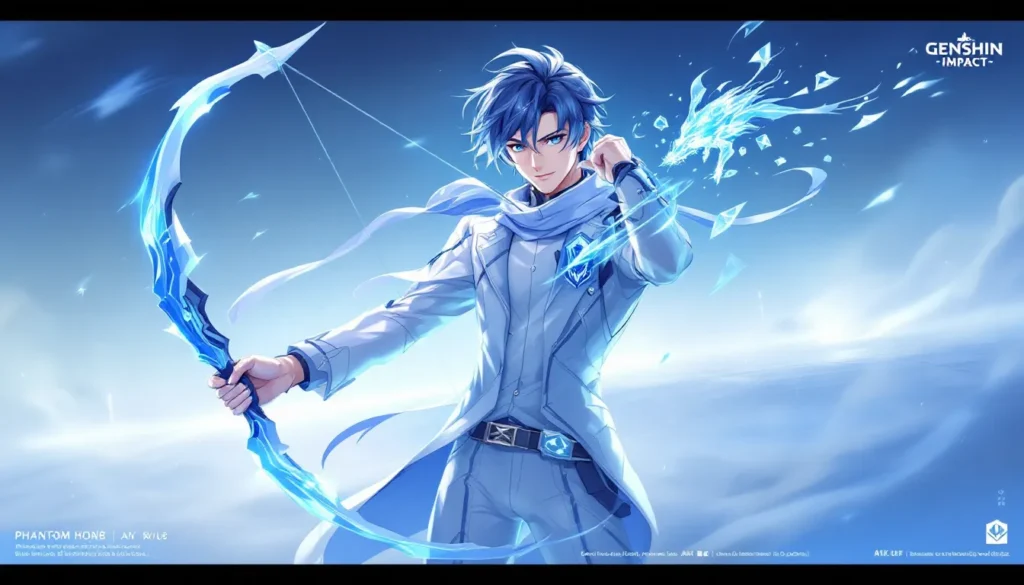
ToggleMika might not be the flashiest Cryo character in Genshin Impact, but he’s quietly become one of the most valuable supports in the game. If you’ve been sleeping on him, it’s time to wake up. This Cryo bow user specializes in buffing physical damage dealers and providing team-wide utility that makes him indispensable for specific team compositions. Whether you’re pushing Spiral Abyss or building around a main DPS character, understanding Mika’s kit, his strengths, energy demands, and optimal placement, can completely transform your team’s performance. This guide breaks down everything from his talents and abilities to artifact builds and team synergies, so you can decide if Mika deserves a spot in your rotation.
Key Takeaways
- Mika is a specialized 4-star Cryo support in Genshin Impact who excels at buffing physical damage dealers and providing team-wide ATK increases through his elemental burst and passive abilities.
- Prioritize Energy Recharge (150–170%), ATK (1,800–2,500+), and 4-Piece Noblesse Oblige artifacts to maximize Mika’s burst buff potency and enable consistent off-cooldown rotations.
- Mika’s Phantom Hound from his Starfrost Arrow skill provides reliable Cryo application with a short cooldown, making him invaluable for physical damage teams and emerging Cryo-Dendro reaction compositions.
- In Spiral Abyss, Mika’s effectiveness varies significantly based on enemy types—he shines in Cryo-vulnerable and physical-focused chambers but struggles against Cryo-immune or Cryo-resistant enemies.
- Mika compares favorably to other Cryo supports like Fischl and Rosaria in specialized team archetypes but offers less versatility than universal supports like Kazuha or Bennett across diverse team compositions.
Who Is Mika and What Makes Him Unique?
Character Overview and Background Story
Mika is a 4-star Cryo bow user from Mondstadt who serves as the captain of the Adventurers’ Guild reconnaissance company. His story emphasizes leadership, strategy, and a quiet determination to protect others, traits that reflect his role in battle. Unlike flashier damage dealers, Mika focuses entirely on support, making him a classic enabler character.
What sets Mika apart is his niche focus on physical damage buffs. In a game dominated by elemental reaction teams, having a dedicated support for physical-focused compositions gives him a specific but powerful identity. He’s not designed to compete with general-purpose supports like Bennett or Fischl, but rather to excel in scenarios where physical damage is the name of the game.
Vision Type and Weapon Classification
Mika wields a Cryo vision and uses a bow as his weapon. This combination is relatively uncommon in Genshin‘s support meta. As a bow user, Mika benefits from ranged positioning, which can be an advantage in certain domains and Abyss chambers. His Cryo vision opens up possibilities for elemental reactions, though his primary function isn’t to apply consistent Cryo damage himself.
The bow weapon class means Mika scales with Dexterity-like mechanics on some platforms, but his talents prioritize ATK and Energy Recharge as primary stats. His weapon choice also means access to a wider selection of support bows in Genshin’s arsenal, from 4-star options to 5-star polearms that can be refitted for his role.
Mika’s Talents and Abilities Explained
Normal Attack and Charged Attack Mechanics
Mika’s normal attacks deliver modest Cryo damage, nothing to write home about for a support character. In typical Mika rotations, you’ll rarely stay on-field long enough to spam normal attacks. His attack string exists primarily as filler during off-rotation moments or when his elemental abilities are on cooldown.
Charged attacks are similarly underwhelming for a support build. Unless you’re artifact-farming and need passive damage, don’t expect his charged shots to carry weight in serious encounters. The real value comes from his elemental kit.
Elemental Skill: Starfrost Arrow
Starfrost Arrow is Mika’s workhorse ability. On activation, he summons a Phantom Hound that roams the field and deals Cryo damage to enemies it contacts. The cooldown is a reasonable 5 seconds (14 seconds for max duration), and it costs no energy. This makes it the primary ability you’ll spam during his on-field time.
The Phantom Hound’s behavior is its defining feature: it moves independently and applies Cryo to enemies without requiring Mika to position himself perfectly. This passive application is invaluable for enabling Cryo-based reactions or simply maintaining Cryo status on enemies for your main DPS.
At level 8 talent investment, Starfrost Arrow deals solid scaling damage based on Mika’s ATK. While support builds don’t stack ATK aggressively, the talent still contributes meaningful off-field damage. The skill also benefits from Mika’s passive talents, which we’ll cover next.
Elemental Burst: Gale-Force Potion
Gale-Force Potion is where Mika truly shines as a support. This 80-cost burst provides a significant ATK buff to active characters on the field and grants a special effect: Felicitation, which increases the damage of bow and polearm wielders. This buff lasts 15 seconds and applies to all party members.
The burst damage scales with Mika’s ATK, but the real value is the buff, not the initial hit. A well-built Mika with 2,500+ ATK can provide meaningful buffs, especially when paired with polearm users like Zhongli or bow users like Fischl.
The 80-cost means you’ll need solid Energy Recharge (around 150-170%) to burst off-cooldown during a typical rotation. This is a crucial stat for Mika builds, and we’ll discuss how to achieve it.
Passive Abilities and Ascension Benefits
Mika’s first passive, Teamwork, increases the damage of Starfrost Arrow based on the number of nearby allies. With a full team, this passive grants a substantial damage boost to his skill. This encourages keeping Mika active on-field alongside teammates, rather than pure off-field application.
His second passive, Keen Sight, reduces the cooldown of Starfrost Arrow by 2 seconds when the Phantom Hound hits enemies. Since the hound deals frequent hits, cooldown reduction is nearly guaranteed during its duration, making Starfrost Arrow spammable in practice.
At ascension 4, Mika gains an additional passive that enhances his burst buff potency. Higher talent levels on his burst directly increase the ATK buff value, making this a priority for leveling alongside his skill.
These passives create a playstyle where Mika cycles through Starfrost Arrow repeatedly, generating passive off-field damage while maintaining team buffs. It’s a smooth rotation that doesn’t demand frame-perfect timing.
Best Builds and Artifact Recommendations
Support-Focused Build Strategy
Mika is fundamentally a support character, so his build prioritizes making him a better enabler rather than a damage dealer. The classic Mika support build emphasizes Energy Recharge and ATK, allowing him to burst off-cooldown while maximizing the buff he provides to teammates.
Priority stats in order:
- Energy Recharge (150–170% depending on team): Non-negotiable. Mika’s burst is his primary contribution, and missing rotations because of energy issues cripples his value.
- ATK (1,800–2,500+): Scales both his burst buff and skill damage. Every point of ATK increases his team’s overall DPS through his buffs.
- Crit Rate/Crit Damage: Not essential for a pure support build, but can be added if energy recharge is already sufficient. More on this below.
- Flat ATK (from substats): Useful, but ATK% is preferable when possible.
Hybrid builds that balance support and personal damage exist but require premium artifacts and weapon rolls. For most players, prioritizing ER and ATK is the optimal path.
Artifact Sets and Stat Priorities
4-Piece Noblesse Oblige is Mika’s go-to set for team-focused builds. It increases burst damage by 20% and grants all teammates 20% ATK for 12 seconds after he casts his burst. This stacks multiplicatively with Mika’s own burst buff, making it one of the highest team damage increases in the game. If you have a well-built Noblesse set sitting around, this is where it belongs.
4-Piece Instructor is a budget alternative if you’re farming other artifact domains. It provides 80 Elemental Mastery to all teammates, which boosts elemental reaction damage. This is particularly useful in teams built around Cryo reactions like Freeze or Melt compositions.
4-Piece Tenacity of the Millelith offers a different angle: it provides 20% HP and grants 3.2% ATK to all teammates whenever Mika deals off-field damage. But, it’s generally weaker than Noblesse for Mika specifically because his burst buff is his main contribution.
2-Piece ATK combinations (e.g., Gladiator’s Finale + Wanderer’s Troupe or two ATK sets) work fine in early game or as a stopgap until you farm better pieces. The consistency of +18% ATK per set is reliable, even if not optimal long-term.
For mainstats, aim for:
- Sands: ATK% (preferred) or Energy Recharge% (if you’re short on ER substats)
- Goblet: ATK% (Cryo% is possible but less consistent for a support build)
- Circlet: Crit Rate, Crit Damage, or ATK% depending on your current stats
Substat priority should emphasize Energy Recharge until you hit 150–170%, then shift to ATK, Crit, or Flat ATK.
Weapon Choices for Maximum Effectiveness
Elegy for the End (5-star) is Mika’s best-in-slot weapon. It provides Energy Recharge, scales beautifully with his build, and grants a massive team-wide buff (90 ATK + 30% ATK) when you trigger a reaction. In reaction-heavy teams, this weapon transforms Mika into a universal team-wide ATK buffer.
Stringless (4-star) is an accessible alternative that boosts Elemental Skill and Burst damage. It doesn’t provide Energy Recharge, so you’ll need to compensate elsewhere, but the damage increase to Starfrost Arrow and Gale-Force Potion is significant.
Favonius Warbow (4-star) is the practical choice for most players building Mika on a budget. It provides Energy Recharge and generates team-wide energy whenever Mika triggers Crits. On-field Crit builds (around 30–40% Crit Rate) turn Favonius into an energy generation machine, enabling burst spam even with lower base ER stats. This is especially valuable if you’re using Mika in more demanding content.
Sacrificial Bow (4-star) resets Starfrost Arrow’s cooldown, increasing on-field uptime and Cryo application. It works well in freeze teams where consistent Cryo application matters. The Energy Recharge substat is also appreciated.
Harp of Stormed Days (5-star) is overkill but works if you’re investing heavily in Mika’s personal damage. It boosts ATK and Cryo damage, scaling his skill and burst effectively. Reserve this for hybrid builds that balance support and DPS contributions.
Weapon recommendation: Start with Favonius Warbow if you have it: transition to Elegy if you pull it. Budget players building pure support can make Stringless or Sacrificial Bow work with proper artifact investment.
Team Compositions and Synergies
Physical Damage Team Builds
Mika’s claim to fame is enabling physical damage carries. Characters like Fischl (bow), Rosaria (polearm), Kaeya (sword), and Razor (claymore) all scale with physical damage and benefit enormously from Mika’s ATK buffs and Cryo application.
Mika + Fischl + Cryo Battery + Flex is a popular Cryo reaction-focused composition. Fischl applies Cryo through her attacks while Mika’s Phantom Hound provides additional Cryo application. Together they enable Cryo reactions on physical damage dealers, compounding the buff effect. The flex slot (often a healer or shielder like Bennett or Zhongli) rounds out the team.
A classic Physical Rosaria team features Mika providing ATK buffs and Cryo application while Rosaria stacks physical damage. Rosaria’s crit-rate passive synergizes well with other team members, and her polearm attacks trigger Mika’s Felicitation burst bonus.
Mika + Fischl + Dendro applicator + Flex recently gained traction as Dendro physical teams became viable. Applying Dendro with physical damage triggers Aggravate reactions, and Mika’s ATK buff amplifies this. The synergy is potent in newer Abyss cycles.
Energy requirements in physical teams are modest because your main DPS usually generates enough energy for both themselves and Mika. Mika’s 80-cost burst is easily sustained with 140–150% ER in these compositions, freeing up artifact slots for more ATK.
Elemental Reaction-Based Teams
While Mika excels with physical damage, he works surprisingly well in elemental reaction teams, particularly Freeze compositions. In a Mika + Fischl + Hydro applicator + Healer setup, Mika provides consistent Cryo application and team-wide ATK buffs. The Hydro + Cryo + Cryo core creates Frozen status, allowing your team to control enemy positioning while capitalizing on Mika’s buffs.
Melt teams built around Cryo carries like Ayaka or Ganyu benefit from Mika’s Cryo application and ATK scaling. While these characters often prefer Kazuha or Nahida in optimized builds, Mika serves as a budget alternative with superior Cryo application consistency.
Cryo-Dendro reaction teams are emerging with 2026 Abyss cycles. Mika’s reliable Cryo output supports Dendro DPS characters that need consistent Cryo triggers. His ATK buff scales the reaction damage, creating a synergy loop.
In reaction-heavy teams, Mika’s role shifts slightly: he prioritizes consistent Cryo application over pure ATK buffing. This still works, but artifact optimization changes. You’d lean slightly more into Energy Recharge and Cryo application reliability rather than maxing ATK.
Abyss and Boss Fight Strategies
Mika’s value in Spiral Abyss varies by chamber. Physical-focused or Cryo-centric chambers are his domain, building teams around his strengths is essential for clearing 36-star consistently.
In single-target boss fights (like Andrius or Scaramouche), Mika provides sustained buffing without needing to juggle multiple enemies. His burst cooldown syncs with typical DPS rotations, meaning your main carry receives near-permanent buff uptime. This is particularly valuable against tanky bosses where fight duration is long.
Multi-enemy Abyss floors require careful energy management. Enemies spread across the arena mean Mika’s Phantom Hound might not hit all targets consistently. In these cases, prioritizing Cryo application through Starfrost Arrow spam becomes critical. Pair him with second Cryo applicators to guarantee coverage.
Riftwolf and elemental-immune enemies are awkward for Mika because he can’t leverage reaction damage. But, his ATK buff still applies, and if your team composition includes non-Cryo DPS, he remains functional. Against Abyss Lectors or Heralds, positioning becomes crucial, keep Mika positioned to apply Cryo safely while maintaining energy generation.
Pro tip: In chambers with Cryo enemies or Pyro shields, Mika might conflict with your team’s reaction strategy. Always adjust team composition based on the chamber specifics rather than forcing a one-size-fits-all Mika team. The Genshin Impact Tier List is a useful reference for understanding character matchups and seasonal meta shifts.
Leveling and Ascension Materials Guide
Character Level and Talent Priority
Mika benefits from standard leveling but doesn’t need excessive investment to function as a support. The priority order is:
- Character Level 80/90: Unlocks all passive talents and ensures reasonable scaling. You don’t strictly need 90/90, but 80/90 is the practical sweet spot for supports.
- Burst (Q): Level this to 9 or 10 as a priority. His burst buff scales directly with talent level, so maximizing it multiplies team damage output.
- Skill (E): Level to 8 or 9. His Starfrost Arrow damage increases with talent level, and higher levels reduce cooldown further through his passive.
- Normal Attack (AA): Last priority. Level 6 or 7 is sufficient: you won’t be relying on normal attacks for damage.
Optimal setup: Character Level 80/90, Burst Level 9, Skill Level 8, Normal Attack Level 6. This costs significantly less than maxing everything while retaining 90%+ of his effectiveness.
Farming Locations and Material Efficiency
Mika’s ascension materials pull from multiple domains and overworld locations:
Shards/Fragments: Mika uses Cryo chunks and shards. These drop from Cryo slimes and Cryo abyss mages scattered across Teyvat. Dragonspine and Inazuma are hotspots for Cryo enemies. Efficient farming takes 15–20 minutes to collect materials for all ascension phases.
Specialty Material: Mika requires Fluorescent Buds, which drop exclusively from Hydro and Dendro oozes found in Sumeru. Farm these in the rainforest regions near Water and Dendro domains. Expect to spend 10–15 minutes collecting materials across both ascension phases.
Boss Material: Icewind Compass drops from the Cryo Hypostasis (Dragonspine, once weekly). This is your time-gated bottleneck. Run this domain twice weekly and you’ll never feel starved for boss materials.
Common Materials: Arrowheads and other standard drops accumulate passively from daily overworld farming. Stock these early.
Talent Materials: Mika’s talent books are Teachings of Prosperity (weekly challenge drops from Guyun Domain). Run this twice weekly on the highest difficulty you can clear comfortably. Upgrading all talents to level 8–9 requires roughly 18–24 runs spread across multiple weeks.
Talent Boss Materials: Mika uses Gilded Scales from the Trounce Domain (Electro Hypostasis, once weekly). Run this whenever it appears in the domain rotation.
Efficiency tip: Farm Cryo chunks and Fluorescent Buds during extended overworld exploration. Pair these runs with daily commissions and ley-line overflow to maximize primogem generation and material collection simultaneously. Unlike some characters with region-specific bottlenecks, Mika’s materials are widely available and farmable in bulk.
Mika Versus Similar Characters in the Meta
How Mika Compares to Other Cryo Supports
Mika vs. Fischl: Fischl is a 4-star Cryo bow user with superior off-field damage but less team-wide buffing. Fischl enables Aggravate reactions through Cryo application, making her indispensable in Dendro teams. Mika, conversely, excels at buffing physical damage and providing consistent Cryo application without competing for field time. If you need reaction-focused damage, Fischl wins. If you need pure ATK buffing and physical enablement, Mika is superior. Ideal solution: use both in separate teams.
Mika vs. Shenhe: Shenhe is a 5-star Cryo support designed explicitly for Cryo damage carries. She provides Cryo damage buffs and Normal Attack buffs that scale with her ATK. Shenhe is stronger for pure Cryo-focused teams with characters like Ayaka or Ganyu. Mika, but, works across more team archetypes and isn’t locked to Cryo damage. For versatility, Mika wins: for maximizing Cryo carry performance, Shenhe is the premium choice.
Mika vs. Rosaria: Rosaria is a Cryo polearm support that applies Cryo while offering crit-rate buffs. She competes directly with Mika for support slots. Rosaria excels when you need crit-rate scaling and personal off-field damage. Mika provides more consistent ATK buffing and better Cryo application. The choice depends on your main DPS: crit-dependent carries prefer Rosaria: physical or reaction-focused carries prefer Mika.
Mika vs. Venti/Kazuha: These Anemo supports are generalist buffing machines. Venti controls enemies through grouping and Elemental Mastery buff: Kazuha provides Elemental Damage bonuses and personal damage. Mika is Cryo-specific and physical-focused, making him a specialist in comparison. In pure damage-per-second potential, Venti and Kazuha often edge out Mika. But, in physical-focused or Cryo-heavy team compositions, Mika provides redundant Cryo application that these characters can’t offer. There’s no true “winner”, they solve different team-building problems.
Meta assessment: Mika occupies a niche. He’s not universally better than top-tier supports, but he’s irreplaceable for specific team archetypes. Investing in Mika is justified if you’re committed to physical damage carries or Cryo-centric compositions. Otherwise, general supports like Bennett or Kazuha might offer better flexibility.
Performance in Current Spiral Abyss Cycles
As of Patch 5.0 (2026), Spiral Abyss floor lineups often feature chambers where Cryo application is valuable. Recent cycles have included stages with Pyro enemies (triggering Cryo utility), Cryo-vulnerable ley line disorders, and physical-focused monster lineups. In these scenarios, Mika performs exceptionally well.
But, Abyss also includes chambers featuring Cryo-immune or Cryo-resistant enemies where Mika’s application is wasted. Chambers with Cryo-shielded enemies or Dendro-focused bosses reduce his effectiveness. Flexible team-building becomes essential, don’t force Mika into every chamber: adapt based on enemy types and chamber requirements.
Recent data from gaming analysis sites tracking 36-star clears shows Mika appearing in approximately 15–20% of successful team compositions across global servers. This is respectable for a niche support character. His appearance increases dramatically in chambers with physical or Cryo enemy lineups but drops significantly when facing incompatible enemy types.
Projection for future Abyss: As Genshin introduces more Dendro and Cryo interactions, Mika’s relevance will likely remain stable or increase slightly. His niche is durable, though unlikely to become “broken” tier without significant buffs.
Tips, Tricks, and Pro Strategies for Mastery
Maximizing Damage Output with Proper Positioning
Mika’s Phantom Hound roams intelligently but isn’t perfect. Positioning him optimally ensures consistent Cryo application to all enemies.
Tight enemy groups: Position Mika roughly in the center of the enemy cluster. The Phantom Hound has a detection radius of about 8 meters: placing Mika here guarantees the hound hits multiple targets simultaneously. This is especially important on multi-enemy Abyss floors.
Spread enemy formations: If enemies are scattered, you’ll need to reposition Mika mid-rotation. Don’t stay locked into one position. Cycle through Starfrost Arrow applications while repositioning to maximize hound uptime across the arena. This feels clunky but separates decent Mika players from great ones.
Ranged advantages: Mika’s bow allows safe positioning at range. In chambers with dangerous melee enemies or floor hazards, abuse this. Stay at the edge of combat, apply Cryo safely, and maintain distance for survival. This is particularly valuable in domains like the Maguu Kenki challenge where close-range positioning is punishing.
Burst positioning: When casting Gale-Force Potion, ensure all teammates are within the buff radius (roughly 15 meters). If a teammate is split away, your burst buff won’t reach them, wasting its contribution. Always position teammates nearby before bursting, or time your burst for when the team naturally groups.
Advanced Energy Recharge Management
Energy Recharge is Mika’s most important stat, and mastering its mechanics unlocks consistent burst spam.
Energy generation mechanics: Mika generates energy through:
- Picking up energy particles (blue drops from on-field kills)
- Picking up energy orbs (white drops from off-field kills)
- His Phantom Hound’s hits (if they trigger Crits with Favonius Warbow)
Optimization strategy: If you’re using Favonius Warbow, build 30–40% Crit Rate on Mika to reliably trigger Crits and generate energy. This converts Favonius into an energy generation machine. Example build: Favonius Warbow + Noblesse Oblige with ATK/ATK/Crit Rate mainstats. This achieves ~120% ER through substats alone, supplemented by Favonius energy generation.
Without Favonius: Aim for 150–170% base Energy Recharge on artifacts and weapon. This ensures burst off-cooldown without relying on Crits. Use Elegy for the End or Stringless as your weapon. Example build: Elegy (27.5% ER) + Noblesse Oblige with ATK/ATK/ER mainstats achieves ~160% ER naturally.
Team energy considerations: If your team includes characters with high-cost bursts (like Ayaka at 80 cost), they generate abundant energy particles. These particles refund energy to Mika, reducing his ER requirements. In high-particle teams, you can get away with 120–140% ER if you’re catching particles consistently. Conversely, low-particle teams (pure DPS + support + support) require higher ER investment.
Rotation timing: Don’t burst immediately after cooldown. Wait for the team’s on-field DPS to finish their rotation so you’re not interrupting damage windows. This small adjustment feels awkward initially but ensures burst damage doesn’t disrupt optimal team sequencing.
Advanced note: Mika’s Starfrost Arrow cooldown interacts favorably with his ER needs. By spamming this skill on-field, you’re applying Cryo consistently while your teammates generate energy off-field. This creates a passive loop where burst availability becomes reliable with modest ER investment.
Resource: twinfinite.net publishes excellent energy management guides for Genshin characters if you want deeper theoretical breakdown.
Conclusion
Mika is a specialized support character that demands specific team-building context to shine. He’s not a universal-tier support like Bennett or Kazuha, but he’s irreplaceable for physical damage carries and Cryo-focused compositions. His strength lies in consistent Cryo application, team-wide ATK buffing, and synergy with niche playstyles that other supports can’t replicate.
If you’re investing in physical damage dealers like Fischl or Rosaria, pulling for Mika is worth serious consideration. If you’re building mono-Cryo freeze teams or exploring emerging Cryo-Dendro reactions, he’s a solid investment. Conversely, if your roster is dominated by reaction-focused DPS or you already have premium supports like Kazuha and Fischl, deprioritizing Mika is defensible.
The meta will shift as future patches introduce new enemies and chamber lineups, but Mika’s niche is durable. His kit won’t fall out of relevance unless Genshin fundamentally reworks physical damage scaling or introduces anti-Cryo mechanics across multiple Abyss cycles. Given the game’s design philosophy, that’s unlikely.
Building Mika efficiently, prioritizing Energy Recharge and ATK, farming Noblesse Oblige artifacts, and selecting your weapon based on available options, transforms him from a situational pick into a reliable team enabler. Mastering his positioning and rotation timing separates functional Mika builds from optimized ones that consistently clear content.
Expect Mika’s usage to fluctuate with Abyss rotations, but for anyone committed to physical or Cryo-heavy teams, he’s worth the investment. Clear his story quest, level his talents, and give him a proper artifact set. You’ll understand why dedicated players consider him one of Genshin’s most underrated supports.