Table of Contents
ToggleGenshin Impact has come a long way since its 2020 launch, and it’s still commanding attention in 2026. Whether you’re a casual player exploring the gorgeous world of Teyvat or a hardcore adventurer grinding Spiral Abyss floors, the free-to-play action RPG continues to evolve with meaningful updates, fresh characters, and expanded content. But is it still worth jumping into, or returning to, in 2026? This Genshin Impact review digs into what makes the game tick, from its combat system and stunning visuals to its monetization model and long-term engagement value. We’ll break down the strengths that keep millions of players invested and the real drawbacks you should know about before committing time and money.
Key Takeaways
- Genshin Impact remains a premier free-to-play action RPG in 2026 with stunning visuals, fluid real-time combat, and cross-platform progression, making it accessible to both casual and hardcore players.
- The elemental reaction system and deep character roster create strategic team-building depth that rewards skill and experimentation over wallet spending.
- Story content, exploration, and casual domains are entirely free and enjoyable, though Spiral Abyss endgame and artifact farming introduce steep difficulty spikes and RNG-based grinding.
- Regular 6-week content updates with new characters, regions, and story progression keep Genshin Impact fresh, but long-term engagement heavily depends on your tolerance for farming and gacha mechanics.
- Artifact farming and Resin limitations are the primary drawbacks that frustrate endgame players, though the game’s pay-for-convenience model never gates core gameplay or story content behind a paywall.
What Is Genshin Impact?
Genshin Impact is a free-to-play action role-playing game developed by miHoYo (now Cognosphere). It launched in September 2020 across PC, PlayStation 4, iOS, and Android, with a Switch port arriving later. The game has since expanded to PS5 and is available on multiple platforms with cross-progression support.
At its core, Genshin Impact is an open-world adventure game where you play as the Traveler, a mysterious wanderer searching for their sibling. You’ll explore the vast continent of Teyvat, recruit allies from different nations and cultures, solve environmental puzzles, defeat monsters, and uncover the secrets of a world shaped by elemental magic. The game’s combination of exploration, combat, and narrative-driven storytelling attracted over 70 million players worldwide within its first year.
What sets Genshin Impact apart from other action RPGs is its commitment to regular updates (every 6 weeks), a growing roster of playable characters, and the ability to experience the entire main story without spending a dime. The game is available across PC, PS4, PS5, iOS, Android, and Nintendo Switch, making it one of the most accessible AAA-quality games in the market.
Gameplay And Combat System
Real-Time Action Mechanics
Genshin Impact’s combat system is where the game truly shines. Unlike turn-based RPGs, you’re controlling characters in real-time, managing their position, dodging enemy attacks, and timing your abilities. Each character has two attack buttons, normal attacks for consistent DPS and charged attacks for heavier hits. The fluidity here is exceptional: switching between characters mid-combat to trigger combo attacks and elemental reactions feels natural and responsive.
The Time To Kill (TTK) against regular enemies is mercifully short, you’re looking at seconds to a minute depending on your gear and character levels. Boss encounters demand more mechanical skill: you’ll need to learn attack patterns, positioning, and when to dodge or shield. Combat feels challenging without being punishing, which appeals to both casual and competitive players.
Elemental System And Strategic Depth
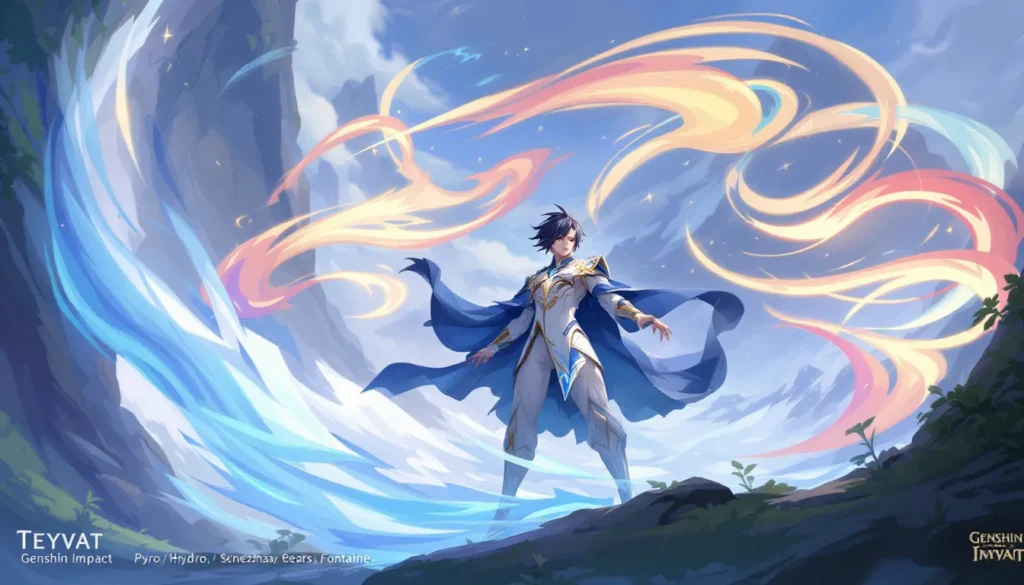
Teyvat is governed by seven elements: Pyro (fire), Hydro (water), Electro (electric), Cryo (ice), Anemo (wind), Geo (earth), and Dendro (nature). The real depth comes from elemental reactions, combining two elements creates powerful effects. Pyro + Hydro creates Vaporize, massively boosting damage. Electro + Hydro triggers Electrocharged, damaging enemies over time. There are 16+ unique reactions, and mastering them is essential for high-level content like Spiral Abyss.
This system forces you to think strategically about team composition. You can’t just stack four DPS characters: you need element diversity, support roles, and reaction synergy. A player exploring new domains might clear them with any team, but endgame content demands optimization. The meta shifts with each character release and balance patch, keeping the strategic landscape fresh.
Character Variety And Party Building
With over 60 playable characters spanning different elements, weapon types, and roles, team building is deeply customizable. Characters fill distinct roles: Main DPS (like Hu Tao or Ayaka), Sub-DPS (like Fischl or Kazuha), Support/Healer (like Bennett or Zhongli), and Shielder (like Nahida for Dendro teams).
You’ll want to reference the Genshin Impact Tier List to understand which characters excel in current meta compositions. Every patch introduces new characters or reruns of existing ones, giving players fresh team-building puzzles. The beauty is that “off-meta” characters are still viable for exploration and casual content: you only feel forced into meta picks when tackling Spiral Abyss’s hardest floors.
Visuals, Art Direction, And Performance
Graphics Quality Across Platforms
Genshin Impact is a visual showcase. The art direction draws inspiration from anime and fantasy aesthetics, creating characters and environments that are instantly recognizable. Teyvat’s regions, from the lush forests of Sumeru to the icy peaks of Snezhnaya, each have distinct visual identities that feel authentic and alive.
On high-end platforms like PS5 and PC (with RTX support), the game runs at impressive fidelity. Lighting is dynamic, particle effects pop when you trigger elemental reactions, and character models are detailed. The performance on mobile and Switch is notably downgraded, but the art direction remains strong enough that the game looks good even at lower resolutions.
Optimization And Frame Rate
PC and PS5 versions target 60 FPS at 1440p or higher, and hit that consistently in most areas. Mobile performance varies based on device: newer flagships run the game smoothly, while older phones may see drops to 30 FPS or lower. This is one area where Genshin Impact requires a decent device on mobile, it’s not optimized for low-end hardware.
The game includes graphics settings to tweak. On PC, you can dial down shadows, reflections, and draw distance to maintain performance. Console versions lack granular settings, but the developers have done solid work ensuring relatively stable frame rates. There’s occasional stuttering during heavy exploration or large event activities, but nothing game-breaking for most players.
World Design And Exploration
Stunning Environments And Hidden Treasures
Teyvat is designed for exploration. Walking through regions feels rewarding because there’s always something to discover, chests tucked into cliffs, hidden shrines, or NPCs offering side quests. The world isn’t bloated with meaningless markers: if you see a distant mountain, you can climb it. Puzzles rewarding chests feel clever rather than tedious, encouraging off-the-beaten-path exploration.
Each region rewards curiosity. Sumeru has nature-based puzzles involving elemental reactions. Fontaine introduces underwater exploration. Inazuma features puzzle mechanisms tied to its islands. The environmental design creates natural “reward loops” where exploring leads to treasure, which levels your characters, enabling harder content.
Hidden treasures include not just chests but also Oculi (collectibles that permanently boost your stamina or HP), secret domains, and unmarked chambers filled with lore. Completionists can spend dozens of hours just exploring, and the developers continue expanding explorable areas with each major patch.
Climbing, Gliding, And Environmental Puzzles
Movement in Genshin Impact is fluid. You can climb nearly any surface (stamina permitting), glide from high points, and use character abilities to traverse obstacles. Cryo users like Ayaka can freeze water to walk across lakes. Anemo users can summon wind currents for extra height. This vertical level design rewards character variety and skill expression.
Environmental puzzles often require specific elements. You’ll need Pyro to ignite torches, Hydro to water plants, and Electro to activate mechanisms. Learning these interactions encourages experimentation. Puzzle difficulty ranges from trivial (light a torch) to genuinely tricky (timed sequences or multi-element puzzles). The Genshin Impact: Thaw All The Shards Out guide details one particularly notorious cryo puzzle type. Overall, the exploration loop feels satisfying without overstaying its welcome.
Monetization And Gacha System
How The Gacha Mechanics Work
Genshin Impact uses a gacha (randomized summon) system to acquire characters and weapons. You accumulate currency, either free Primogems or paid Genesis Crystals, to roll on “banners” featuring limited 5-star characters. Each pull costs 160 Primogems, and the rate for a 5-star is roughly 0.6% per pull. You’re guaranteed one 5-star every 90 pulls (hard pity) or 80 pulls on average (soft pity threshold). Character banners also feature 4-star characters at a higher rate, making those pulls worthwhile even if you don’t land the 5-star.
The system is transparent about odds. The developers publish official probabilities, which is more than some gacha games offer. Free players earn ~14,000-15,000 Primogems monthly (enough for ~90 pulls), so saving across 2-3 banners guarantees your desired character through hard pity.
Battle Pass And Free-To-Play Value
The optional Battle Pass (paid tier) costs $10 and rewards weapon blueprints, talent level-up materials, and other progression items. It’s valuable but not essential, free players get 90% of the same rewards through gameplay. The Pass completes through daily tasks and weekly challenges, requiring maybe 30 minutes daily.
Beyond gacha, Genshin offers a modest Welkin Moon subscription ($5/month) providing daily Primogems. These are convenience purchases, not power gates. Players grinding 2-3 hours weekly can absolutely stay competitive without spending money.
Is It Pay-To-Win?
No, but with caveats. Genshin Impact is pay-for-convenience, not pay-to-win. A free player can clear all story content, explore completely, and even tackle challenging domains. Spiral Abyss (the 36-floor endgame dungeon) is doable without paying, though whales with c6 (fully constellation) 5-star characters have an easier time.
The real gate is time, not money. Leveling characters, farming artifacts, and ascending weapons takes weeks. Paying accelerates this but doesn’t fundamentally change what you can accomplish. A f2p player with disciplined artifact farming will eventually outdamage a whale with mediocre builds. Your skill, team synergy, and understanding of mechanics matter far more than your wallet.
Story, Quests, And Narrative Content
Main Campaign And Character Story Quests
The main story progresses through Acts, with each nation contributing a chapter. Act 1-4 are complete: Act 5 launched mid-2024, and Act 6 is coming in 2026. The pacing is deliberate, rolling out new story every few patches. This prevents content drought but means the main campaign feels slow if you binge it, the developers intend it as a multi-year narrative.
Each playable character has Character Story Quests (1-4 per character) diving into their backstory. These are surprisingly well-written. They establish character motivations, relationships, and personal stakes that make you care about them beyond their combat utility. Story quests don’t require advanced gameplay, anyone can complete them regardless of level.
Secondary quests (side quests) are abundant and varied. Some are one-off fetch quests, but many weave into local lore or character arcs. The world feels lived-in because NPCs have relationships and arcs spanning multiple quests. A deep jump into Reddit Genshin Impact communities reveals that players actively discuss and theorize about lore, indicating genuine investment in the narrative.
Writing Quality And World-Building
The writing is genuinely strong. Dialogue balances humor, drama, and world-building. Character interactions feel natural, you’ll encounter witty banter, touching moments, and surprisingly dark lore tidbits. The English voice acting is solid, though the Japanese and Chinese dubs are equally well-regarded: players often debate which is superior.
World-building is layered. Obvious lore comes from cutscenes and quests, but deeper lore hides in item descriptions, NPC dialogue, and environment details. Teyvat has a rich history spanning civilizations, the Archons (elemental gods), and the Abyss. The game trusts players to piece together the narrative rather than force-feeding exposition. This invites discussion and theory-crafting within the community.
Endgame Content And Long-Term Engagement
Spiral Abyss And Challenging Domains
Spiral Abyss is Genshin’s primary endgame. It’s a 36-floor tower with 3 chambers per floor (12 floors total per half). Floors 1-8 are easy warm-ups: floors 9-12 demand well-built teams and strategy. You face time limits and sometimes debuffs that reduce your effectiveness.
Abyss resets every two weeks, and each cycle introduces new enemy lineups and mechanics. This forces players to adjust strategies and keep their roster diverse. Clearing floor 12 (36 stars max) requires at least two viable team compositions. Top-tier players can do this with f2p 4-star teams: casuals might struggle even with 5-stars if artifacts are weak.
Domains are dungeons with specific elemental or enemy types. Running them grants artifact drop sets and weapon ascension materials. Farming domains consumes the bulk of endgame time. There’s genuine RNG frustration here, you might farm a domain 20+ times for one useful artifact. Domains feel rewarding when you hit that godroll artifact, but the grind is real.
Events, Updates, And Content Roadmap
Events drop every patch (every 6 weeks). Some are story-driven and time-limited: others unlock permanently as “Hangout Events” (character date scenarios). Most events last 2-3 weeks and provide Primogems, experience, and materials. They’re designed for casual engagement, no one is forced to hardcore grind.
The content roadmap is transparent. Mihoyo publishes patch notes 2-3 weeks ahead, outlining new characters, quests, events, and balance changes. This predictability helps players plan their Primogem spending. In 2026, the roadmap shows consistent 6-week cycles with new regions, story progression, and character releases.
Long-term engagement hinges on this update schedule. If patches feel stale (rare) or balance changes gut your favorite character (uncommon), engagement dips. But the developers are responsive to feedback, adjusting patch content based on community sentiment. The Genshin Impact Bennett Build guide demonstrates how characters remain relevant even after nerfs if built correctly.
Community, Multiplayer, And Social Features
Cross-Platform Play And Account Linking
Genshin Impact supports cross-progression. Start on PC, continue on mobile, switch to console, your world and characters travel with you. This is seamless: logging into a different platform automatically syncs your account. It’s a massive convenience feature that few other games offer at this scale.
Cross-play multiplayer is available but limited. You can join co-op dungeons with players on any platform, but you can’t seamlessly transition between platforms mid-session. You’ve got to exit co-op, switch platforms, and rejoin. It’s functional but clunky compared to true cross-play in other titles.
Account security is solid. The game supports multi-factor authentication, and you can link accounts to email, phone, or third-party services. Account recovery is straightforward if you lose access, which is critical for a free-to-play game where your account is your investment.
Co-Op Dungeons And Multiplayer Elements
Co-op is limited to dungeons, domains, and specific events. You can invite up to 3 friends (max 4 players) to co-op domains and clear them together. This doesn’t affect your single-player world: it’s a separate instance. Co-op is social and occasionally necessary if you want to farm materials efficiently.
The open-world multiplayer system lets you see other players’ characters and can matchmake for “Ley Line Overflow” events, but you can’t directly adventure together in the open world. This is by design, the developers want exploration to be a solo experience. For true squad play, you’ll want to use Genshin Impact Crossplay features within the limited co-op dungeons.
Community strength is evident. Subreddits, Discord servers, and fan wikis thrive. Players share builds, guides, and fanart. The official forums see thousands of posts daily. This social ecosystem makes the single-player game feel less isolating and provides valuable resources for optimization.
Pros And Cons
What Genshin Impact Does Right
Accessibility is paramount. A free-to-play AAA game of this caliber shouldn’t exist, yet here it is. Story, exploration, and casually challenging content require zero spending. The cross-platform support means you can play literally anywhere.
Combat feels phenomenal. Real-time action with elemental reaction depth creates a satisfying feedback loop. Landing a perfectly-timed Vaporize crit on a boss or executing a full reaction chain feels great, whether you’re casual or competitive. The skill ceiling is impressively high without gate-keeping casuals.
Regular content drops prevent stagnation. Every 6 weeks brings new story, characters, and events. This consistency keeps the game fresh and gives you reasons to log in beyond pure progression grinding.
World design encourages exploration. Teyvat rewards curiosity. Hidden chests, secret domains, and visual storytelling make traversal engaging rather than tedious.
Gorgeous presentation across platforms. Even on mobile, Genshin is visually impressive. The art direction compensates for technical limitations. According to Metacritic, Genshin received strong critical scores praising its aesthetic appeal and technical achievement.
Drawbacks And Areas For Improvement
Artifact RNG is brutal. Farming artifacts might yield 20 useless drops before a single godroll. This grind gate frustrates players and feels antithetical to skill expression. Some players quit specifically due to artifact farming burnout.
Resin system limits playtime. Your regenerating stamina (Resin) gates domain farming. Once you burn it, efficient farming stops. This is intentional game design to prevent burnout, but it feels restrictive if you want long grinding sessions. Events and story bypass this, but endgame farming is limited.
Abyss difficulty spikes are steep. Floors 1-8 feel trivial: floors 9-12 suddenly demand specific team comps and artifacts. Casual players hit a hard wall here. This creates a “meta or bust” mentality where running off-meta characters becomes impractical.
Limited co-op options. Multiplayer is restricted to dungeons, which feels restrictive compared to open-world co-op in competitors like Warframe or Destiny 2. You can’t adventure with friends seamlessly.
Balance patches can gut characters. While rare, when changes happen, they’re sometimes severe. For instance, Electro received a major rework in 2023, affecting builds and meta. As an RPG Site review notes, balance changes in live-service games always create tension between innovation and stability.
Battery drain on mobile. Running Genshin on a phone drains battery fast, especially on high graphics settings. This limits portable play sessions.
Final Verdict
Genshin Impact in 2026 remains one of the best free-to-play action RPGs available. Its foundation, compelling combat, gorgeous world, engaging story, and accessibility, is solid and only improves with each patch.
If you value open-world exploration, anime-style visuals, and a game that respects your wallet, Genshin is worth your time. The story is gripping, combat feels incredible, and there’s genuinely hundreds of hours of content before endgame farming consumes most gameplay.
Caveat: Endgame is a different beast. If you’re chasing Spiral Abyss perfection or collecting all characters, expect severe grinding and potential frustration with artifact RNG and gacha rates. This isn’t a “finish the story and beat the final boss” game: it’s a long-term engagement platform.
For casual players and explorers? An easy recommend. For competitive players hunting optimization? You’ll find that, but brace for grinding and accept that some RNG losses are inevitable. For everyone else, try it. It’s free. Teyvat is waiting, and the Traveler’s journey only gets more interesting as you invest time into this ever-evolving world. Characters like Dehya exemplify how even niche picks can find relevance with creative building. And Ayaka showcases how top-tier DPS should feel in action. The game continuously evolves, ensuring that 2026 feels fresh even for veterans who started in 2020.
Final score: 8.5/10 for casual to mid-tier play. 7/10 for hardcore optimization grinders frustrated by artifact RNG. Either way, it’s worth checking out.